
Small Business Growth Strategies: How an Offshore Team Helps SMEs Compete With Big Players

Every growing small business hits the same wall. The ideas are there, the customers are interested, and the opportunity is obvious. But the budget only stretches to one more hire, the right candidate takes months to find, and the owner ends up doing three jobs while the plan waits. Meanwhile, larger competitors simply hire their way to the next stage.
The best small business growth strategies don’t try to outspend the big players. They change the maths. This guide looks at the hiring and budget constraints holding SMEs back, what those constraints really cost, and how building a skilled offshore team lets small businesses scale operations, execute bigger ideas, and compete with much larger companies without breaking the bank.
The SME Squeeze: Big Ambitions, Small Budgets
Small businesses carry a huge share of the economy. In the UK, government business population estimates show SMEs make up 99.85% of private sector businesses, employ 60% of the private sector workforce, and generate 51% of turnover. Yet they compete for the same talent as companies with far deeper pockets.
That competition is tough on both sides of the world. Jobs and Skills Australia found 45% of recruiting employers had difficulty filling their most recent vacancy. In the UK, the British Chambers of Commerce’s latest recruitment outlook, reported by the Career Development Institute, found 75% of firms trying to recruit faced difficulties.
For a large company, a hard-to-fill role is an inconvenience. For an SME with ten people, it can stall a whole department. That’s why hiring for small business needs a different playbook, not just a bigger recruitment budget.
What Hiring Constraints Really Cost
When a role stays empty, the work doesn’t disappear. Someone else absorbs it, usually the owner or the most capable person in the team. Jobs and Skills Australia found the two most common effects of recruitment difficulty were existing staff working longer hours (32% of recruiting employers) and lost productivity or revenue (22%).
| What You See | What It’s Costing You |
|---|---|
| The owner still does admin, invoicing, and support | No time for sales, partnerships, or strategy |
| Turning down work or delaying projects | Revenue that goes straight to competitors |
| Key staff working nights and weekends | Burnout and the risk of losing your best people |
| Big ideas parked “until we can afford it” | Growth that never quite starts |
| Slow replies to leads and customers | A reputation that lags behind your actual quality |
None of these show up as a line on the profit and loss statement, which is why they’re so easy to tolerate. But together, they’re the reason many capable SMEs stay the same size for years.

How an Offshore Team Changes the Maths
Offshore staffing in the Philippines typically costs 50 to 70% less than an equivalent local hire, once salary, super or National Insurance, leave, and overhead are included. For a small business, that isn’t just a saving. It’s the difference between adding one person and adding a small team.
| Same Annual Budget | Local Hiring | Offshore Team in the Philippines |
|---|---|---|
| Headcount | 1 person | Roughly 2 to 3 dedicated professionals |
| Skills covered | One role, one skill set | For example, admin, bookkeeping, and support |
| Time to start | Often 30 to 60 days or more | As few as 14 days |
| HR, payroll, and equipment | Your responsibility | Handled for you |
| Flexibility | Fixed cost once hired | No lock-in and no minimum headcount |
The talent pool supports it. Industry figures reported by The Philippine Star put the country’s IT and business process workforce at around 1.9 million people, so even specialist roles are easier to fill than in a tight local market.
“Big companies win by having more hands. An offshore team gives a small business the same advantage at a price it can actually afford.”
Building Your First Offshore Team
A strong offshore team for an SME usually starts with the work that eats the owner’s and senior team’s time. These are the roles that tend to deliver results fastest.
Executive or Virtual Assistant
Inbox, calendar, travel, documents, and follow-ups, so the owner can focus on growth.
Bookkeeping and Finance
Payables, receivables, reconciliations, and reporting in Xero, MYOB, or QuickBooks.
Customer Support
Phone, chat, email, and social support so customers get fast answers every time.
Marketing and Creative
Social media, content, design, and SEO without paying local agency retainers.
IT and Development
Developers, IT support, and QA to build and maintain your digital products.
Sales Support
Lead research, CRM updates, proposals, and appointment setting for your sales team.
Philippine professionals often thrive in small teams. They’re used to working directly with business owners, adapting as processes change, and taking initiative without layers of management. Our offshore staffing for SMEs covers all of these roles, with specialist options for back office, customer support, and IT functions.
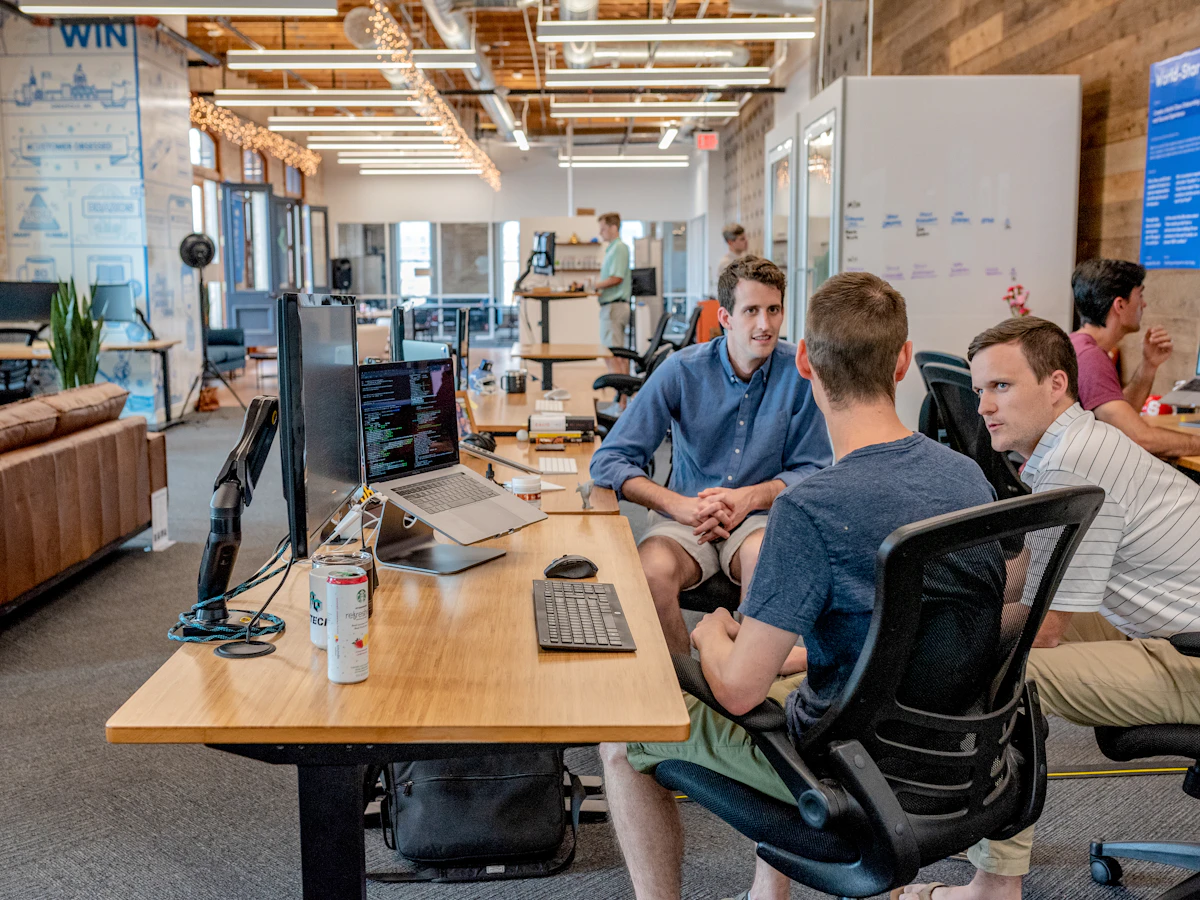
Competing Toe-to-Toe With Bigger Players
Large companies don’t usually win because their ideas are better. They win because they have the capacity to act on them: more coverage, more specialists, and more people to execute. An offshore team closes much of that gap.
| Capability | Typical SME | SME With an Offshore Team | Large Competitor |
|---|---|---|---|
| Customer response hours | Business hours only | Extended or after-hours coverage | Extended coverage |
| Specialist skills | Generalists covering everything | Dedicated specialists per function | Specialist teams |
| Speed of execution | Limited by owner’s time | Projects run in parallel | Parallel delivery |
| Cost per role | Full local rates | 50 to 70% lower | Often offshore already |
| Agility | High | High | Slower decisions |
That last row is the SME’s secret weapon. Small businesses can make decisions in a day that take a large company a quarter. Add the capacity to act on those decisions, and the playing field looks very different. Many large companies already use offshore teams to scale, so SMEs that do the same are simply using the same tools.
A Phased Plan for Scaling a Small Business
You don’t need to build a whole team at once. The SMEs that scale most smoothly move in steps, proving each one before adding the next.
- Start with one role. Pick the function taking the most of the owner’s time, usually admin, bookkeeping, or support.
- Document and hand over. Write down the key processes and run a short handover period with daily check-ins.
- Add a second role within a few months. Once the first role is running smoothly, move the next bottleneck offshore.
- Grow into a team. With three or more offshore staff, consider a team lead to manage day-to-day priorities.
- Reinvest the savings. Put the money saved into sales, marketing, or the big idea you’ve been waiting to fund.
Manila’s UTC+8 time zone overlaps most of the Australian business day and supports later shifts for UK hours, so your team works when you need them. For the employment side, our guide on how offshore staffing works explains who handles contracts, payroll, and HR.
A simple starting test: List every task you did last week that someone else could have done with clear instructions. If it adds up to 20 hours or more, your first offshore role is already defined.
Frequently Asked Questions
Common questions from SMEs considering their first offshore team.
Focus on adding capacity where it frees up the most time and revenue. Many SMEs start by moving routine work such as admin, bookkeeping, or customer support to a dedicated offshore team, then reinvest the savings into sales and growth projects.
Yes. Offshore staffing isn’t just for large corporations. With a partner that has no minimum headcount and no lock-in, a small business can start with a single dedicated hire and grow from there.
Offshore staffing in the Philippines typically saves Australian and UK SMEs 50 to 70% on total employment costs compared with equivalent local hires. In practice, the budget for one local role can often cover two to three offshore professionals.
Start with repeatable, well-defined work that takes up the owner’s or senior team’s time. Executive or virtual assistance, bookkeeping, customer support, and marketing coordination are common first roles because they’re easy to document and measure.
With a managed staffing partner, a first hire can typically start within about 14 days of approval. Most SMEs then add roles one at a time over the following months as each function is handed over successfully.
Limited budgets and tight local hiring markets don’t have to cap your growth. The constraint isn’t ambition or ideas. It’s capacity, and capacity is exactly what a skilled offshore team provides at a cost a growing business can sustain.
Start with one role, prove it works, and build from there. Before long, your small business will have the reach, coverage, and speed to compete with players many times its size.
Ready to Build Your First Offshore Team?
UpraisIT helps Australian and UK SMEs hire dedicated professionals in the Philippines, with full HR management, no lock-in, and no minimum headcount.
Get a Free Consultation → Hire one person or a full team. You approve every hire.