
Beyond Code-Takers With Autonomous Software Specialists Who Drive Engineering Velocity
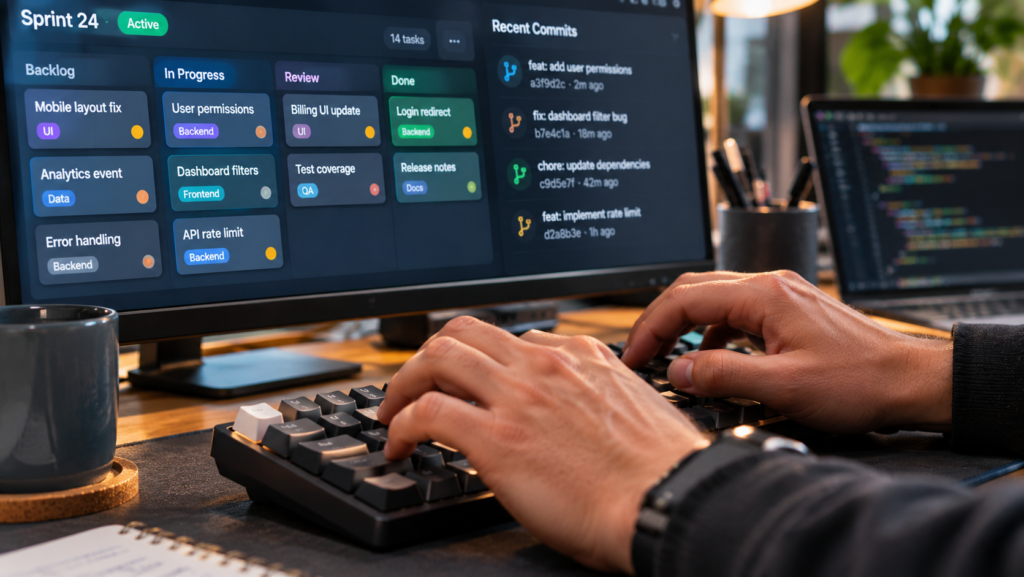
Sprint review is in an hour and three of the offshore team’s tickets are still in “In Review.” Your lead architect has left forty comments on one pull request, rewritten the core function in another, and spent the morning explaining an API contract that was documented in the ticket. The team closed plenty of story points. Very little of it shipped.
That’s the hidden engineering drag of cheap staffing. Code-takers implement exactly what’s written, ask about everything that isn’t, and push work that needs senior rework before it can merge. The cost doesn’t appear on the invoice. It appears in your architects’ calendars and your release dates.
Engineering leaders who’ve cut that drag hire differently. They bring in pre-vetted Philippine software specialists who parse requirements, solve design problems on their own, and open pull requests that are ready to review, not ready to rewrite.
- 90% of technology professionals now use AI at work, but AI amplifies a team’s existing strengths and weaknesses.
- 72% of engineering leaders say new developers take more than a month to submit their first three meaningful PRs.
- Real sprint velocity comes from engineers who own outcomes, not just tickets.
- Dedicated Philippine engineers cost 50 to 70% less than comparable US or Australian hires.
The Hidden Engineering Drag
Low-cost engineers are only low-cost if they don’t consume your senior team.
AI Elaborates What’s Already There
Google’s 2025 DORA Report, based on nearly 5,000 technology professionals, found 90% use AI at work and more than 80% believe it has increased their productivity. Yet 30% report little or no trust in AI-generated code, and AI adoption still has a negative relationship with delivery stability. As the report puts it, AI doesn’t fix a team. It amplifies what’s already there. Weak engineers with AI produce more code for your architects to untangle.
Ramp-Up Takes Longer Than You Think
Cortex’s 2024 State of Developer Productivity survey of 50 engineering leaders found 72% say it takes new developers more than a month to submit their first three meaningful pull requests, and searching for project context was the most-cited blocker. Every week of hand-holding during that ramp is senior time diverted from architecture.
Story Points Aren’t Shipped Value
Code-takers can keep a burndown chart looking healthy while pull requests stall in review, tests are skipped, and edge cases surface in production. The velocity number looks fine. The release doesn’t.
One Ticket, Two Journeys
The difference between a code-taker and a technical owner shows up at every stage of a single Jira ticket.
| Stage | Code-Taker | Technical Owner |
|---|---|---|
| Requirements | Implements the literal text | Clarifies intent and edge cases upfront |
| Design | Waits for the architect | Proposes an approach that fits the codebase |
| Implementation | Copies patterns without context | Writes clean, tested, production-grade code |
| Pull request | Large, unexplained diff | Small, described, and self-reviewed |
| Review | Several rounds of rework | Focused feedback, quick merge |
| After release | Moves to the next ticket | Checks behaviour and flags follow-ups |

Code-Takers vs Technical Owners
Offshore IT staffing should add engineering capacity, not review workload.
| Factor | Legacy Staffing Agency | Managed Task-Runner | Autonomous Specialist |
|---|---|---|---|
| Vetting | CV screening | Basic coding test | Code review, take-home, and live interview |
| Task breakdown | Needed for everything | Needed for most work | Handles epics and decomposes them |
| Architecture | Ignored | Followed when explained | Understood and respected |
| Senior review time | High | High | Focused on design decisions |
| Team fit | Contractor on the side | Partial participant | Full member of your sprints |
A Self-Directed Engineering Engine
When engineers own components end to end, your architects move from writing and rewriting code to guiding direction and approving designs. Throughput rises because each new engineer adds capacity rather than review load.
Three Pillars of Autonomous Engineering Pods
Specialized niche mastery in self-directed software teams rests on three capabilities.
Architectural Autonomy
- Parses requirements
- Solves logic bottlenecks
- Proposes designs
- Production-ready PRs
Stack Fluency
- Full-stack and API work
- Your languages and frameworks
- Git workflows
- CI/CD pipelines
Quality and Security
- Tested, clean code
- Peer review in your repo
- Role-based access
- NDAs and VPN controls
Architectural Autonomy and Minimal Hand-Holding
Developers are screened with a code review, a take-home challenge, and a live technical interview before reaching your shortlist, and you can run your own technical interviews, pair programming sessions, or take-home tasks. The result is engineers who parse requirements independently, work through complex logic, and bring questions only when a design decision needs your input.
Full-Stack and Enterprise Framework Mastery
Candidates are matched to your stack and experience level, whether that’s React and Node.js, Python, Java, .NET, or cloud-native API integration. They work inside your existing tools, including Slack, Jira, GitHub, and Notion, plug into your Git workflow and CI/CD pipelines, and attend your stand-ups and sprint ceremonies like any team member.
Continuous Quality and Security Governance
Controls include signed NDAs, role-based access, device management policies, and VPN requirements configured to your security standards. For regulated sectors such as fintech or healthcare, controls can be tailored to align with SOC 2, HIPAA, or equivalent requirements before your engineer starts. Pair that with peer review and automated scanning in your own pipeline, and quality stops depending on your architects catching everything.
“Code-takers close tickets. Technical owners ship features.”
A Definition of Done That Removes Rework
Autonomous engineers still need a shared standard. A clear definition of done tells them exactly what “finished” means before anything reaches review.
- Acceptance criteria met, including edge cases discussed in refinement.
- Unit and integration tests written and passing in CI.
- Pull request is small, clearly described, and self-reviewed.
- Security and lint checks pass in the pipeline.
- Documentation and API contracts updated where needed.
- Change verified in staging before requesting approval.
Ask every engineer to leave the first review comment on their own pull request, explaining the approach and any trade-offs. It surfaces gaps early and turns senior review into a quick confirmation.
Measuring Sprint Velocity Honestly
Sprint velocity is useful for planning, but on its own it can hide rework. Pair it with signals that show whether work actually shipped cleanly.
| Metric | What It Tells You |
|---|---|
| Sprint velocity | How much planned work the team completes per sprint |
| PR cycle time | How long work waits between opening and merging |
| Review rounds per PR | How much senior rework the team is creating |
| Change failure rate | How often releases cause problems in production |
| Escaped defects | Bugs found by users instead of tests |
| Time to first meaningful PR | How quickly new engineers start contributing |

Developer Onboarding to Ownership
Autonomy builds in stages. A structured ramp gets a remote software engineer from first commit to owning a component quickly.
Week 1
Environment set up, codebase tour, first small PR merged.
Weeks 2 to 4
Scoped features delivered with light review.
Month 2
Owns a component and reviews peers’ PRs.
Month 3
Breaks down epics and proposes improvements.
UpraisIT places specialists across every technical role through its offshore IT staffing service.
Software Development
Full-stack, front-end, back-end, and API developers.
Cloud and DevOps
CI/CD, containers, and infrastructure-as-code.
Data Engineering
ETL pipelines, warehouses, and dashboards.
Cybersecurity
Security analysts and compliance specialists.
IT Support
Level 1 to 3 helpdesk and endpoint management.
QA and Testing
Test plans and automated suites across web, mobile, and API.
- React
- Node.js
- Python
- Java
- .NET
- REST APIs
- GitHub
- Jira
- Slack
- Notion
Why UpraisIT
You Set the Bar
You approve every hire, and no one joins your team without passing your own technical bar. UpraisIT acts as employer of record, handling contracts, payroll, government compliance, equipment, and benefits, while employment contracts explicitly assign all IP to your business. If a placement doesn’t meet expectations within 90 days, a replacement is sourced at no additional placement cost, subject to standard terms. The Philippines ranks 28th globally in the EF English Proficiency Index, keeping stand-ups, documentation, and PR discussions clear.
Sprint-Ready Time Zones
| Your City | Your 9 to 5 in Manila | Shift |
|---|---|---|
| 🇦🇺 Sydney and Melbourne (AEDT) | 6am to 2pm | Day shift, full stand-up overlap |
| 🇦🇺 Perth (AWST) | 9am to 5pm | Same hours |
| 🇺🇸 New York (EST) | 10pm to 6am | Night shift |
| 🇺🇸 Chicago (CST) | 11pm to 7am | Night shift |
| 🇺🇸 Los Angeles (PST) | 1am to 9am | Night shift |
Explore further. See UpraisIT’s software development outsourcing, cloud solutions, or technical support outsourcing.

Frequently Asked Questions
Common questions from engineering leaders about autonomous offshore developers.
Developers complete a code review, a take-home challenge, and a live technical interview before reaching your shortlist. You can then run your own interviews, pair programming, or take-home tasks before approving a hire.
Yes. They work in your tools, such as Slack, Jira, GitHub, and Notion, attend stand-ups, contribute to sprints, and report to your managers like any other team member.
Your company owns all intellectual property created by your offshore team. Employment contracts explicitly assign IP to your business.
Signed NDAs, role-based access controls, device management policies, and VPN requirements configured to your standards. For regulated industries, controls can be tailored to align with SOC 2, HIPAA, or equivalent requirements.
No. UpraisIT acts as the employer of record, handling Philippine employment law, tax compliance, and statutory benefits on your behalf.
Cheap code that needs constant rework isn’t cheap. Pre-vetted Philippine engineers who parse requirements, own components, and meet a clear definition of done lift sprint velocity in a way that actually ships, while giving your architects back the hours they’ve been losing to hand-holding.
Fewer rewrites. Faster merges. Releases that land.
Schedule an Autonomous IT Hiring Consultation
Tell UpraisIT about your stack, team structure, and where senior engineers lose the most time. We’ll walk you through candidate availability, salary benchmarks, and a realistic hiring timeline.
Book Your Consultation → No commitment. Response within 1 business day.