
Scaling Your SME Without Becoming a Full-Time Offshore Manager
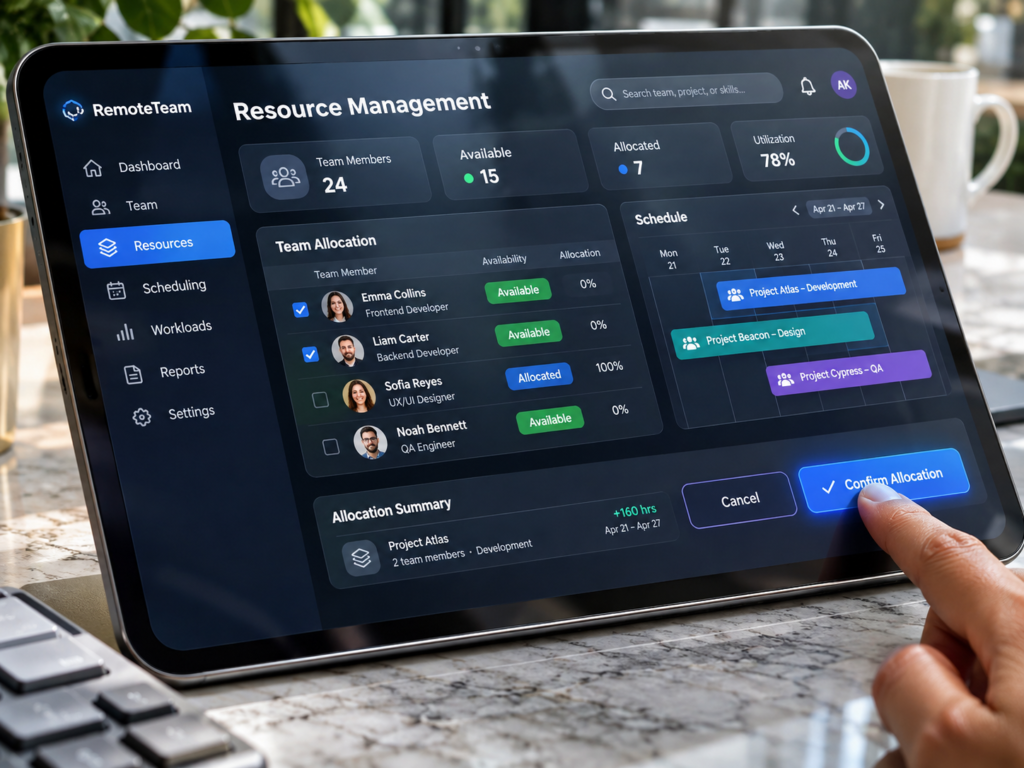
You hired offshore help to get your evenings back. Six months later, you’re on a 7am call walking someone through the same invoice process for the third time, checking every customer email before it goes out, and answering Slack messages that start with “quick question.” The work is getting done. You just haven’t stopped doing it.
That’s the founder’s dilemma. Growing a small business means handing work to other people, but the wrong offshore model hands it straight back. Instead of a growing team, you get a second job as a full-time offshore manager, paying a management tax in the hours that should go to sales, customers, and strategy.
The founders who break out of it don’t hire more task-runners. They learn how to delegate outcomes to dedicated, pre-vetted Philippine specialists who own a function, solve routine problems on their own, and bring you decisions rather than questions.
- UK SME owners spend 7.3 hours a week on HR and team coordination, more than they spend on strategy and planning.
- Nearly a third of Australian small business owners have never taken a full week off.
- Knowing how to delegate outcomes, not tasks, is what separates a growing team from a second job.
- Dedicated Philippine staff typically cost 50 to 70% less than local hires, with no minimum headcount and no lock-in.
The Hidden Drag on SME Founders
In a large company, managing people is someone’s full-time job. In an SME, it usually lands on the founder, on top of everything else.
Coordination Competes With Strategy
A NerdWallet UK survey of 500 SME owners and decision-makers, run by OnePoll in June 2025, found owners spend 7.3 hours a week on HR and team coordination and another 7.3 hours on admin and operational tasks. Business strategy and planning got 6.8 hours, the smallest share of any category measured.
Owners Are Running on Empty
BizCover’s State of Australian Small Business Owners 2026, based on 1,500 small business owners surveyed in April 2026, found 31.7% have never taken a full week off while running their business, and 61.2% worked through illness in the past year. Looking back, 43.5% said they’d set clearer work-hour boundaries, and 38.2% would seek more support.
Task-Runners Add Hours Instead of Removing Them
Offshore staff who need step-by-step direction don’t reduce that load. They shift it from doing the work to explaining, checking, and correcting it. For a lean team, that’s often worse, because there’s no middle manager to absorb it.

Where Founder Hours Leak
The management tax rarely shows up on a timesheet. It hides in small, repeated interruptions across every function you’ve delegated.
| Function | With a Task-Runner | With an Autonomous Specialist |
|---|---|---|
| Customer support | You check replies before they’re sent | Resolves routine queries and escalates the rest with context |
| Bookkeeping | You recode transactions and chase receipts | Reconciles accounts and flags exceptions in Xero, MYOB, or QuickBooks |
| Admin and inbox | Asks how to handle each new request | Follows your rules and drafts replies for anything unusual |
| Marketing | Waits for every brief | Plans the calendar and brings ideas for approval |
| HR and payroll admin | Needs reminders for every deadline | Runs onboarding, leave records, and pay cycles on schedule |
“If you’re still the person everyone asks, you haven’t delegated. You’ve just added a step.”
Three Ways to Build an Offshore Team
Offshore staffing for SMEs isn’t one model. The difference between them shows up in your calendar.
| Factor | Freelance Marketplace | Managed Task-Runner | Autonomous Specialist |
|---|---|---|---|
| Commitment | Shared across many clients | Assigned, but generalist | Full-time and dedicated to you |
| Vetting | Reviews and profiles | Basic screening | Skills assessed, background-checked, reference-verified |
| Direction needed | Detailed brief per job | Step-by-step for each task | Clear goals, then works independently |
| HR and compliance | Your problem | Partly handled | Contracts, payroll, and compliance fully managed |
| Your role | Project manager | Daily supervisor | Leader who sets direction |
From Task-Runners to Operational Owners
Cheap hourly headcount buys hands. An operational owner buys back your attention. When a specialist understands what a good outcome looks like for your business, they stop waiting for instructions and start running the function, which turns offshore staffing into a multiplier of your team’s capacity rather than another thing to manage.
The Delegation Ladder
Learning how to delegate is less about handing over tasks and more about handing over decisions in stages. Here’s a simple ladder to move each role up over the first few months.
Do as Shown
The specialist follows your documented process while learning your business.
Recommend
They propose a fix or response, and you approve it.
Act and Report
They handle it within agreed limits and tell you what they did.
Own the Outcome
They run the function, and you review results weekly.
Record a short screen video the first time you do any recurring task, then ask your new hire to turn it into a written process. You explain it once, and they prove they understand it by documenting it.
Three Pillars of Autonomous SME Pods
Specialized niche mastery in self-directed offshore teams rests on three capabilities.
Operational Ownership
- Matched to your sector and role
- Used to working with owners directly
- Takes initiative without layers
- Flags problems with options
Toolchain Fluency
- Works in your existing systems
- Joins your stand-ups and Slack
- Xero, MYOB, and QuickBooks
- Your CRM, help desk, and HRIS
Built-In Governance
- Confidentiality agreements
- Role-based access controls
- Device management policies
- Account manager support
High Operational Autonomy With Minimal Hand-Holding
Philippine professionals are used to working directly with business owners, adapting to evolving processes, and taking initiative without layers of corporate structure. Vetting is tailored to the function and sector of each role, so your hire understands your context from the start rather than needing weeks to find their footing.
Plug-and-Play Toolchain Fluency
Your team member works in your existing tools, attends your meetings, and communicates through the same channels as everyone else. Depending on the role, that might mean Xero, MYOB, or QuickBooks for bookkeeping, Zendesk or HubSpot for customer support, Salesforce for sales admin, or Notion for marketing workflows.
Governance Without Extra Overhead
Every staff member signs a confidentiality agreement before starting. Role-based access, device management policies, and data handling procedures are configured to your requirements and aligned with the Australian Privacy Act or UK GDPR where needed. You also get an account manager, so HR questions and performance concerns don’t become another job for you.

Choosing Your First Offshore Role
Start with the function that takes the most of your time but needs the least of your judgment. Here are the roles SMEs most often move first.
Customer Support
Calls, chat, email, and social replies in your brand voice.
Admin and Workplace
Executive and virtual assistants, data entry, and admin officers.
Bookkeeping and Finance
Payables, receivables, reconciliations, and reporting.
IT and Technical Support
Developers, helpdesk specialists, DevOps engineers, and QA testers.
Marketing and Creative
Social media, content, design, and SEO support.
HR and Payroll Admin
Employee records, leave, onboarding, and payroll processing.
- Retail and eCommerce
- Professional Services
- Property and Real Estate
- Healthcare
- SaaS and Technology
- Transport and Logistics
- Trades and Construction
- Hospitality
- Education
- Insurance and Broking
The Extension Model
Most SMEs don’t have an HR team to run an offshore program. UpraisIT’s SME offshore staffing service handles it end to end.
Local Hire vs Offshore Specialist
| Factor | Local Hire | Offshore Specialist via UpraisIT |
|---|---|---|
| Cost | $55,000 to $100,000+ a year for most business roles | 50 to 70% lower total cost |
| Time to start | Weeks or months | Within 14 business days of sign-off |
| HR and payroll | Your responsibility | Managed on one monthly invoice |
| Scaling | Slow, with high fixed costs | Start with one hire, no minimum headcount |
The Philippines ranks 28th globally in the EF English Proficiency Index, and English is the default language of business and education, which keeps written handovers and customer communication clear.
Working Hours That Fit Your Day
| Your City | Your 9 to 5 in Manila | Shift |
|---|---|---|
| 🇦🇺 Sydney and Melbourne (AEDT) | 6am to 2pm | Early day shift |
| 🇦🇺 Brisbane (AEST) | 7am to 3pm | Day shift |
| 🇦🇺 Perth (AWST) | 9am to 5pm | Same hours |
| 🇬🇧 London (GMT) | 5pm to 1am | Evening shift, or a Manila day shift with work ready by your morning |
Explore further. See UpraisIT’s virtual administrative assistants, customer support outsourcing, or accounting and bookkeeping outsourcing.

Frequently Asked Questions
Common questions from SME founders about building an offshore team without becoming its manager.
Yes. There’s no minimum headcount. Many SMEs place one person, prove the model, and then add roles as the business grows.
Treat them like any remote team member. They work in your tools, join your meetings, and use your channels. Start with documented processes, then hand over decisions in stages as trust builds. An account manager supports you along the way.
Yes. A dedicated staff member works full-time for your business only, inside your systems and processes. A freelancer typically juggles several clients and bills by the job, so they rarely build the same depth of knowledge.
One monthly invoice covers salary, statutory Philippine government contributions, HR management, compliance, equipment, and internet, with no separate recruitment fees layered on top.
If a placement isn’t working out within the first 90 days, UpraisIT sources a replacement at no additional placement cost and manages offboarding and access removal for you.
Scaling an SME shouldn’t mean trading one job for another. When your offshore team is vetted for the role, dedicated to your business, and trusted to own its function, delegation finally does what it promised. You set the direction, review the results, and spend your hours where only a founder can.
Fewer check-ins. More capacity. A business that grows without consuming you.
Reclaim Your Time From Day-to-Day Management
Tell UpraisIT which roles are taking up your week. We’ll show you which to move offshore first, what a dedicated specialist would cost, and what the 14-day onboarding looks like.
Book an Offshore Staffing Consultation → No commitment. Response within 1 business day.