
Managed Cloud Services from the Philippines: A Practical Guide for AU and US Businesses
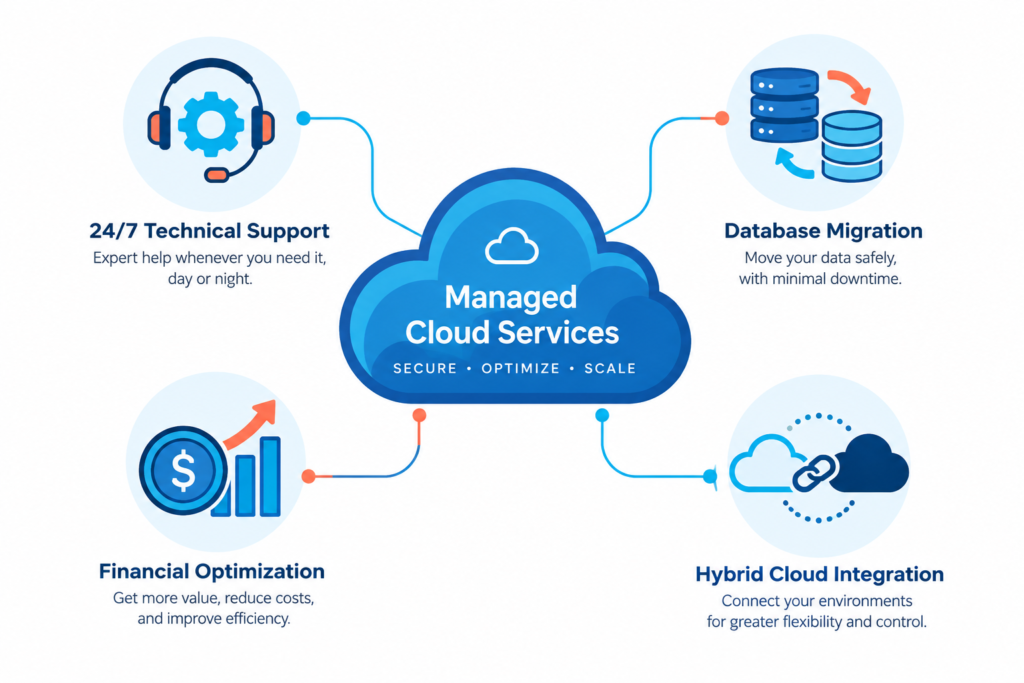
Almost every growing business now runs on the cloud, but very few can afford the team it takes to run it well. In Australia and the United States, a mid-level cloud engineer or architect commands $120,000 to $200,000 or more a year, and the good ones are fielding several offers at once. So the cloud environment often ends up looked after by a stretched developer, a single overworked sysadmin, or nobody in particular.
The result is familiar: rising cloud bills nobody fully understands, security settings that haven’t been reviewed in years, and alerts that go unanswered overnight. A growing number of Australian and US businesses are solving this with certified cloud engineers based in the Philippines, working as an extension of their own tech team. This guide explains how that model works, what to hand over, what to keep, and how to stay in control.
The Cloud Talent Gap in Australia and the US
Cloud skills are among the hardest technology skills to hire for. Demand for AWS, Azure and Google Cloud experience has outpaced supply for years, and the gap is widest in exactly the areas businesses need most: security, DevOps automation and cost management. For a mid-market company, hiring even one senior cloud engineer locally can take months and cost more than the rest of the IT budget combined.
A single hire also doesn’t solve the real problem. One person can’t cover migrations, daily operations, security reviews, cost optimisation and on-call monitoring at the same time. And when they go on leave or move on, the knowledge goes with them.
The Philippines has built a strong cloud talent market on the back of its IT education system, active vendor certification programs and English as the working language of the tech industry. That means documentation, incident reports and architecture proposals come back in clear, professional English, and engineers are used to working inside Western teams and processes.
Cloud Work That Suits a Philippines Team
Cloud work is naturally remote. It happens in consoles, terminals and code repositories, not in a server room down the hall. That makes almost every cloud function a good fit for an offshore team, provided access and change control are set up properly.
Cloud Migration
Assessing on-premise or hybrid workloads, planning the move to AWS, Azure or GCP, and running staged migrations with parallel environments to protect uptime.
Managed Cloud Infrastructure
Day-to-day management of compute, storage, networking and identity, including provisioning, patching, backups and performance tuning.
DevOps and CI/CD
Building and maintaining pipelines, containers and Kubernetes clusters, and infrastructure-as-code with Terraform, Ansible or CloudFormation.
Cloud Security
IAM hardening, encryption, vulnerability scanning, security posture reviews and ongoing monitoring aligned with your compliance frameworks.
Cost Optimisation (FinOps)
Finding idle and oversized resources, planning reserved instances and savings plans, and setting up budgets and alerts so spend stays predictable.
24/7 Cloud Operations (NOC)
Round-the-clock uptime monitoring, alert triage and first response, working from documented runbooks with clear escalation paths.
Worth noting: Cost optimisation is often the fastest win. Many cloud environments carry forgotten test servers, oversized instances and unattached storage that quietly add to the monthly bill. A focused review can help offset the cost of the team itself. See our full range of managed cloud solutions from the Philippines.

Staying in Control: Who Owns What
The most common worry about any managed cloud arrangement is losing control of your own environment. The answer is to be clear from day one about what your business owns and what the team operates. The cloud platforms already work this way: providers like AWS describe a shared responsibility model, and the same thinking applies between you and your managed cloud team.
| Area | Your Business | Philippines Cloud Team |
|---|---|---|
| Cloud accounts and billing | Owns accounts, root access and payment | Works through named, limited accounts |
| Architecture decisions | Approves designs and major changes | Proposes, documents and builds |
| Day-to-day operations | Receives reports and alerts | Patching, backups, monitoring, tuning |
| Infrastructure changes | Reviews and approves pull requests | Writes and tests infrastructure-as-code |
| Incidents | Is informed and escalated to per runbook | Triage, first response and root-cause report |
| Compliance accountability | Remains accountable to regulators and customers | Implements and evidences controls |
“Outsource the work, not the ownership. When you hold the keys and approve the changes, a remote cloud team becomes an extension of your business, not a risk to it.”
What the Cost Difference Actually Looks Like
Cloud engineering is one of the best-paid disciplines in technology, which makes the cost gap especially large. On top of salary, a local hire brings benefits or superannuation, payroll taxes, equipment, training and certification costs, and the expense of on-call or after-hours cover.
| Cost Area | Local Cloud Hire (AU / US) | Philippines Cloud Team via UpraisIT |
|---|---|---|
| Annual salary, mid-level engineer | $120,000–$200,000+ | 50–65% lower total cost |
| Benefits, super and payroll taxes | On top of salary | Included in monthly fee |
| Time to hire | Often several months | Pre-screened engineers in weeks |
| After-hours monitoring | On-call allowances or a second hire | Covered by time zone and shift model |
| Scaling the team | Re-enter a tight local market | Add engineers as needed |
| Knowledge if someone leaves | Often walks out the door | Retained in runbooks and code |
For the cost of one senior local engineer, many businesses can fund a small Philippines team: for example, a cloud engineer, a DevOps specialist and part-time NOC cover. That gives you depth, holiday cover and around-the-clock monitoring instead of a single point of failure.
24/7 Coverage and Follow-the-Sun Operations
Manila’s time zone (UTC+8, with no daylight saving) works differently for each market, and in both cases it works in your favour. Australian businesses get strong overlap for stand-ups and live collaboration. US businesses get a team that is awake while their own engineers are asleep.
| Your Location | Manila vs Local | How the Team Supports You |
|---|---|---|
| Perth | Same time | Full business-day collaboration |
| Brisbane | 2 hrs behind | Near-full overlap, early day shift |
| Sydney / Melbourne | 2–3 hrs behind | Near-full overlap, early day shift |
| New York | 12–13 hrs ahead | Manila day shift covers the US overnight |
| Los Angeles | 15–16 hrs ahead | Manila day and evening shifts cover the US overnight |
For US clients this is the real advantage: the Philippines team monitors production, handles patching windows and triages alerts through the US night, then hands over a clear summary at the start of the US business day. Your local engineers stop waking up to 3am pages, and maintenance happens when your customers are least affected.

Security and Compliance Essentials
Giving anyone access to your cloud environment should be done carefully, whether they sit in Sydney, Seattle or Manila. These are the controls to insist on from day one:
- Least-privilege access. Named accounts through SSO, role-based permissions that match each person’s job, and no shared logins.
- MFA everywhere. Multi-factor authentication on every console, repository and VPN, with root or global admin credentials held only by your business.
- Everything as code. Infrastructure changes made through Terraform or similar, reviewed via pull requests and fully version-controlled.
- Full audit logging. CloudTrail, Azure Activity Log or Google Cloud Audit Logs switched on, retained and reviewed, so every action is traceable.
- Framework alignment. Controls mapped to the standards that matter to you, such as SOC 2, ISO 27001, HIPAA for US healthcare, or the Essential Eight and the Australian Privacy Principles for Australian organisations.
Tip: Keep a “break-glass” emergency admin account that only your business controls, stored securely and tested regularly. It guarantees you can always get into your own environment, whatever happens with any provider.
Getting Started Without Risking Uptime
You don’t need to hand over everything at once. The safest approach is to start with visibility, then take over operations in stages.
- Run a discovery and architecture review. Map what’s running, what it costs, how it’s secured and where documentation is missing.
- Agree the design and roadmap. Approve a documented plan covering target architecture, security controls, cost model and timeline before anything changes.
- Start with low-risk, high-value work. Cost optimisation, monitoring and documentation are good first steps that build trust quickly.
- Migrate or take over in stages. Use parallel environments and tested cutovers so production stays protected at every step.
- Move to managed operations. Agree SLAs, runbooks and monthly reporting on health, cost, incidents and recommendations.
To see the platforms, services and engagement model in more detail, visit our cloud solutions page. If you’re also looking at other functions to move offshore, our overview of BPO services in the Philippines covers customer support, finance, IT support and back-office roles.
Frequently Asked Questions
Common questions from Australian and US businesses considering a Philippines-based cloud team.
Yes. AWS, Microsoft and Google all run certification and partner programs in the Philippines, and experienced engineers hold the same associate, professional and specialty certifications as their Australian and US counterparts. Any reputable provider should verify certifications before shortlisting a candidate, and you can check them yourself through each vendor’s credential verification service.
You should. In a well-run managed cloud engagement your business owns the cloud accounts, billing and root or global administrator credentials. Engineers work through named, least-privilege accounts, changes go through infrastructure-as-code and pull request reviews, and major architecture decisions need your approval.
Mid-level cloud engineers and architects in Australia and the US typically earn $120,000 to $200,000 or more. Equivalent certified engineers in the Philippines usually cost 50 to 65% less, with employment, payroll and HR included in one monthly fee. Many businesses also reduce their cloud bill through rightsizing and cost optimisation work.
Yes. Manila is 12 to 16 hours ahead of the main US time zones, so a Philippines day or evening shift covers the US overnight period. This makes follow-the-sun operations possible, with incidents triaged overnight and a handover report ready at the start of the US business day.
Yes. Most engagements start with an existing environment. The first step is a discovery and architecture review covering what is running, what it costs, how it is secured and where documentation is missing. From there the team builds runbooks, brings infrastructure under code where practical, and takes over day-to-day operations in stages.
The cloud has made infrastructure flexible, but running it well still takes skilled people, and in Australia and the US those people are scarce and expensive. A Philippines-based cloud team gives you certified engineers, round-the-clock coverage and room to grow, at a cost that makes sense for a mid-market business.
Keep ownership of your accounts, approve the changes that matter, and let a dedicated team handle the rest. That’s how you get enterprise-grade cloud operations without an enterprise-sized payroll.
Want to See What a Philippines Cloud Team Could Do for Your Business?
UpraisIT provides certified AWS, Azure and Google Cloud engineers, DevOps specialists and 24/7 cloud operations for Australian and US businesses.
Talk to a Cloud Specialist → No obligation. Response within 1 business day.