
Beyond Clip-Cutters to Autonomous Video and Motion Pods That Accelerate Creative Velocity
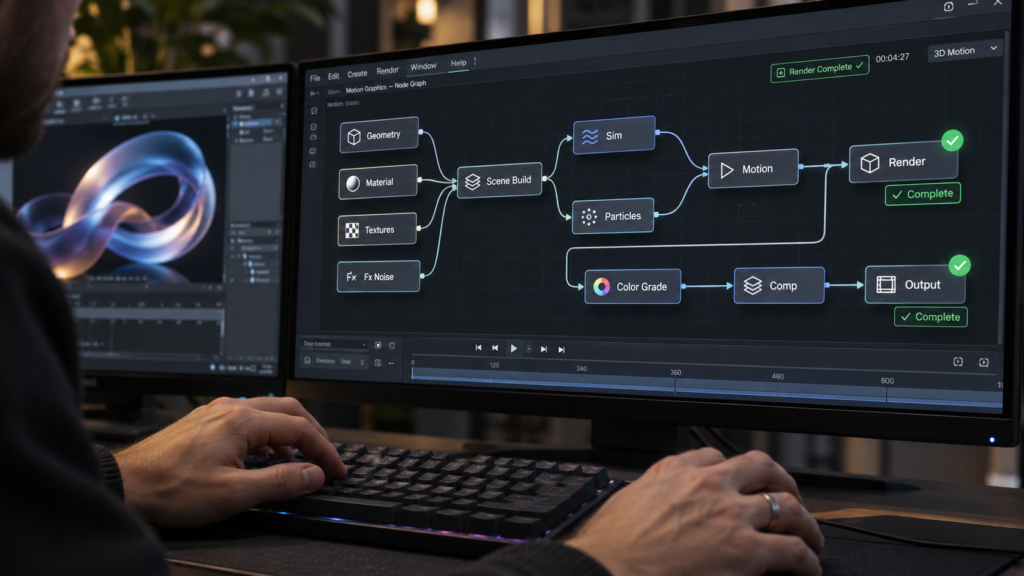
Version four of the product launch video lands in Frame.io at 9am. Your senior producer opens it, sighs, and starts typing. 00:03, the hook is buried. 00:11, wrong font on the lower third. 00:26, music drowns the voiceover. 00:41, logo colour is off again. Forty minutes later, the revision log is longer than the script, and the launch is another day away.
That’s the hidden drag on creative leadership. Outsourced editing was meant to free your team to think about the story. Instead, many creative directors end up as full-time note-takers for mechanical clip-cutters, writing timestamped video feedback for fixes that should never have reached them.
Brands breaking out of the revision loop work with dedicated Philippine editors and motion designers who learn the brand kit, understand pacing, and check their own work before you see it, so review becomes a creative conversation instead of a correction list.
- 51% of video teams report flat or declining budgets, and capacity, not ideas, is the main constraint on output.
- 57% of creatives say projects typically go through three to five versions before they’re done.
- Fewer, better rounds of video feedback depend on editors who self-check against your brand kit.
- Dedicated Philippine editors typically cost 50 to 70% less than local hires, with every file owned by you.
The Hidden Drag on Creative Leadership
Video demand keeps climbing while budgets and headcount stay flat. Every extra revision round makes the gap wider.
Capacity Is the Constraint
Wistia’s 2026 State of Video Report, based on a survey of nearly 1,000 marketing professionals and data from more than 13 million videos, found 51% of teams report flat or declining video budgets, and the biggest blockers to making more video are company size, resources, and cost. 76% resize videos for different platforms, half of them every time they publish, as reported by PPC Land.
Revision Rounds Eat the Calendar
Ziflow’s State of Creative Workflow report, run with the American Marketing Association in 2023, found 57% of creatives say a project typically goes through three to five versions before it’s done, and a quarter produce more than six. 48% spend at least five hours a month chasing feedback, and 60% regularly explain to stakeholders how to give it.
Clip-Cutters Multiply the Rounds
Editors who wait for frame-by-frame direction turn every cut into another review. The output volume looks fine on paper, but your producers spend their best hours on notes instead of narrative.

Anatomy of a Revision Log
Here’s an illustrative revision log for a 45-second product video. Most of the notes a creative director writes for a clip-cutter are things an autonomous editor catches before the first review.
| Timestamp | Note Written for a Clip-Cutter | Caught by an Autonomous Editor |
|---|---|---|
| 00:00 to 00:03 | Hook is buried behind the logo sting | Opens on the product moment, logo moved to the end |
| 00:11 | Wrong font on the lower third | Uses the brand template from the start |
| 00:26 | Music drowns the voiceover | Audio cleaned and mixed before export |
| 00:41 | Logo colour doesn’t match the brand | Colour checked against the brand kit |
| Delivery | Where are the 9:16 and 1:1 versions? | All formats exported to the agreed specs |
“Your feedback should shape the story, not fix the font.”
Clip-Cutters vs Visual Storytellers
Video outsourcing tends to fall into three models. The difference shows up in how many rounds each video needs.
| Factor | Freelance Marketplace or Legacy BPO | Managed Task-Runner | Autonomous Specialist |
|---|---|---|---|
| Commitment | Juggles many clients | Assigned, but template-bound | Full-time and dedicated to your brand |
| Story | Cuts in script order | Follows timestamped notes | Shapes the cut around the hook and audience |
| Brand | Varies by editor | Needs reminders | Applies your brand kit and templates by default |
| Files | On someone else’s drive | Partly organised | Organised project files in your storage |
| Your role | Chaser | Frame-by-frame director | Creative lead who approves |
From Mechanical Cutting to Visual Storytelling
An editor who understands why a video exists, who it’s for, and where it will run makes better decisions without being told. They protect audience retention in the first seconds, pace for the platform, and bring hook variations for ad creative testing, turning post-production from a bottleneck into an engine that runs ahead of your calendar.
Three Pillars of Autonomous Video Pods
Specialized niche mastery in self-directed post-production rests on three capabilities.
Narrative Ownership
- Hook-first, retention-focused pacing
- Story shaped from raw footage
- Hook variations for creative testing
- 2D, 3D, and motion design
Pipeline Fluency
- Premiere Pro and After Effects
- DaVinci Resolve and Final Cut Pro
- Cinema 4D and Blender
- Frame.io, Drive, and Dropbox
Brand and Finish Quality
- Brand kit and templates applied
- Colour correction and grading
- Audio clean-up and mixing
- Optional senior editor for QA
Narrative Autonomy With Minimal Hand-Holding
Filipino creatives grow up on American, Australian, and British film, TV, and social content, so pacing, humour, captions, and cultural cues come naturally. Editors and motion designers are sourced for showreels that match your style, then learn your brand kit, templates, and review process before delivering, from short-form social clips and performance ads to long-form YouTube episodes and SaaS explainer videos.
Native Post-Production Toolchain
Your team works in Adobe Premiere Pro, After Effects, DaVinci Resolve, Final Cut Pro, Cinema 4D, Blender, Adobe Audition, Illustrator, CapCut, Descript, and Lottie, and edits directly from your Google Drive, Dropbox, or Frame.io. Proxy workflows keep large shoots moving, while full-resolution files are used for final exports.
Quality and Brand Governance
Colour correction and grading, audio clean-up and mixing, subtitles, and final mastering are part of the finishing process. In a video content pod, a senior editor can manage quality and deadlines across the team. All footage, project files, templates, and finished videos are your intellectual property under confidentiality and IP assignment agreements.

The First-Cut Standard
The fastest way to fewer revision rounds is a shared standard for what “ready for review” means. Here’s a simple self-check an autonomous editor runs before any cut reaches you.
- The hook lands in the first three seconds for short-form, and the opening earns attention for long-form.
- Fonts, colours, lower thirds, and logo usage match the brand kit.
- Dialogue is clear, music sits under the voice, and levels are consistent.
- Captions are accurate and styled to your template.
- Every agreed ratio and length is exported and named correctly.
Consolidate video feedback into one round with one decision-maker. Ask reviewers to separate story notes from polish notes, so your editor can fix the big things first and avoid reworking the same scene twice.
One Story, Every Format
Autonomous editors plan for every channel from the first cut, so one shoot becomes a full set of platform-native assets.
9 by 16
Reels, TikTok, Shorts, and Stories.
4 by 5
Instagram and Facebook feed.
1 by 1
LinkedIn, feed ads, and audiograms.
16 by 9
YouTube, websites, and presentations.
- Short-Form Social
- Long-Form and YouTube
- Video Ads and UGC
- Motion Graphics
- 2D and 3D Animation
- Colour and Audio Finishing
The Extension Model
UpraisIT’s video editing and motion media outsourcing service handles sourcing, vetting, equipment, payroll, and account management, so your pod works as part of your creative department.
Creative Discovery
Your brand, formats, platforms, volume, tools, and the style you love.
Reel and Skills Review
Showreels matched to your style, plus an editing test, English assessment, and background check.
Interview and Test Edit
You interview and can run a paid test edit with your own footage.
Onboard, Create, and Scale
Brand kit and review process learned, with an account manager supporting performance.
Choose Your Video Team
| Model | Who’s Included | Best For |
|---|---|---|
| Dedicated Video Editor | One full-time editor across short and long form | Creators and growing brands |
| Video Content Pod | Editors plus a motion designer, optionally led by a senior editor | Brands publishing daily |
| Agency White-Label Studio | Editors and animators delivering under your agency brand | Creative and media agencies |
The Philippines ranks 28th globally in the EF English Proficiency Index, which helps with scripts, captions, and feedback calls. A local editor typically costs US$60,000, A$70,000, or £30,000 or more before benefits, plus workstation and software costs that UpraisIT includes.
Cuts That Move While You Sleep
| Your City | Your 9 to 5 in Manila | Working Model |
|---|---|---|
| 🇺🇸 New York (EST) | 10pm to 6am | Night shift or overnight turnaround |
| 🇺🇸 Los Angeles (PST) | 1am to 9am | Night shift or overnight turnaround |
| 🇬🇧 London (GMT) | 5pm to 1am | Evening shift or overnight turnaround |
| 🇦🇺 Sydney and Melbourne (AEDT) | 6am to 2pm | Shared working day |
Explore further. See UpraisIT’s creative design outsourcing, social media and content marketing, or digital marketing outsourcing.
Frequently Asked Questions
Common questions from creative leaders about autonomous video and motion pods.
Yes, when the editor is dedicated to your brand and works to a clear first-cut standard. Because they learn your brand kit, pacing, and templates, more of your feedback goes into story decisions rather than fixes.
Many can, and repurposing long-form into short clips is a popular workflow. For high volumes or specialised work like 3D animation, a small pod that combines editors and a motion designer usually works better.
You do. All raw footage, project files, templates, and finished videos are your intellectual property, protected by confidentiality and IP assignment agreements and stored in your own systems.
Editors work directly from your Google Drive, Dropbox, or Frame.io over fast, redundant connections. For very large shoots, proxy workflows keep editing smooth, with full-resolution files used for final exports.
Yes. You can add motion designers or 2D and 3D animators at any time, either as dedicated hires or as part of a video content pod alongside your editors.
Creative velocity isn’t about cutting faster. It’s about fewer rounds between the idea and the finished video. When dedicated editors and motion designers own the story, the brand kit, and the finish, your producers stop writing correction logs and start directing the work that builds the brand.
Fewer revision rounds. Faster launches. Video that looks like you on every screen.
Escape the Revision Loop
Tell UpraisIT about your formats, volume, tools, and brand. We’ll outline an autonomous video and motion pod that cuts management drag and what it would cost.
Book a Video Pod Consultation → No commitment. Response within 1 business day.