
Beyond Troubleshooting: Strategic Technical Support Outsourcing for Modern Business Growth
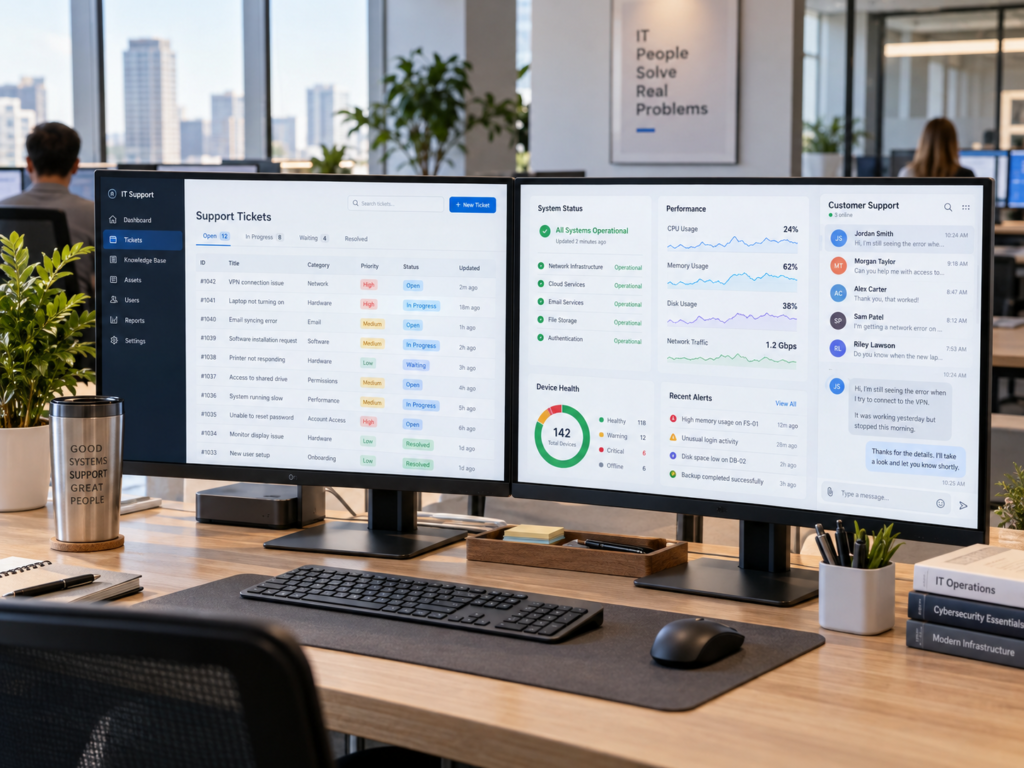
It starts with a quick favour. A customer can’t log in, so a developer checks the auth logs. A product manager answers a “how do I” email because support is swamped. By the end of the quarter, your most expensive people are working a help desk queue, and the roadmap is three sprints behind.
That’s the hidden cost of engineering distraction. Strategic technical support services fix it at the root. A dedicated, tech-fluent offshore desk owns Tier 1 and Tier 2 work around the clock, escalates cleanly when engineering is truly needed, and turns support from a cost center into a retention engine. Here’s how to design it.
- Developers in one Microsoft study spent about 11% of their time coding, against an ideal of 20%.
- For over 90% of mid-size and large enterprises, an hour of downtime costs more than $300,000.
- 87% of customers say companies using GenAI for service must offer access to a human.
- A dedicated offshore desk delivers 24/7 coverage at up to 70% lower cost.
The Cost of Engineering Distraction
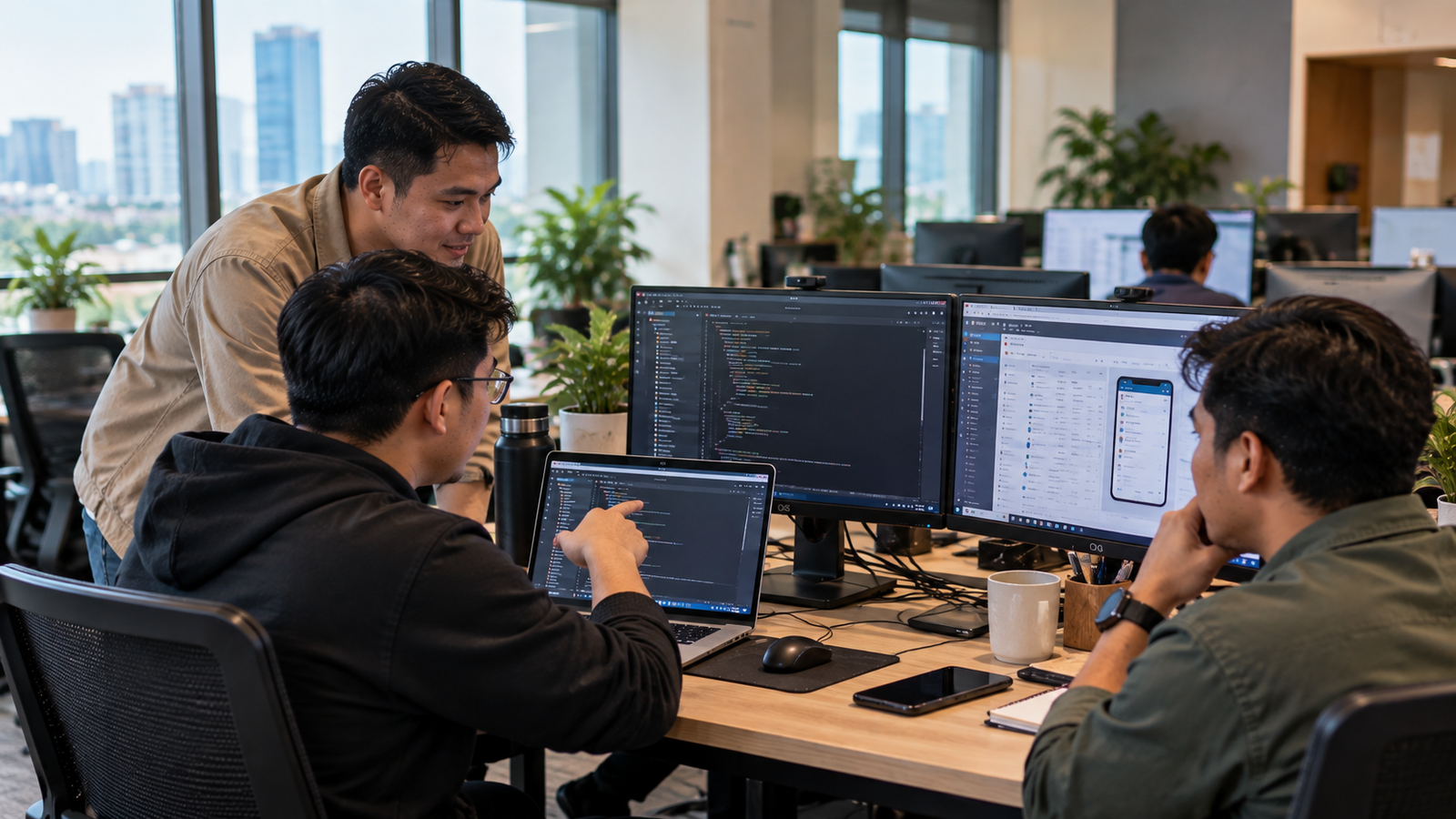
Routine tickets don’t look expensive one at a time. Together, they quietly tax your entire product organisation.
Tickets Inside the Sprint
Every password reset, permissions question, or “is this a bug?” message that reaches an engineer costs far more than the minutes it takes to answer. Context switching breaks deep work, and deep work is already scarce. In a study of 484 Microsoft developers, coding took up roughly 11% of their actual week, while they said ideally it would be about 20%.
Roadmaps That Slip
When engineers and product managers become the unofficial support tier, feature work slows and launches drift. Incidents make it worse. The ITIC 2024 Hourly Cost of Downtime survey of more than 1,000 firms found an hour of downtime now costs over $300,000 for more than 90% of mid-size and large enterprises. Slow triage and escalation turn minor outages into expensive ones.
Burnout on Both Sides
Engineers resent being pulled off planned work, and overloaded support agents rush fixes that come back as repeat tickets. Budgets offer little relief. A 2026 Gartner survey of 199 service and support leaders found overall function budgets rose just 2%, even as AI spending jumped 38%.
From Reactive Fixing to Support Architecture
Ticket resolution is the baseline. A support architecture is designed to resolve faster, escalate smarter, and keep customers longer.
| Reactive Fixing | Strategic Support Architecture |
|---|---|
| Whoever is free answers the ticket | Defined tiers with clear ownership |
| Business-hours coverage only | After-hours, weekend, or full 24/7 rotations |
| Engineers handle routine issues | Engineers see only well-documented escalations |
| Knowledge lives in people’s heads | Knowledge base articles written and updated by the desk |
| Success measured by tickets closed | Success measured by SLA, FCR, and CSAT |
Metrics That Explain Great Support
First Response Time
How quickly a customer hears from a real person.
First Contact Resolution
Issues solved in one touch, without escalation or follow-up.
CSAT
How customers rate their support experience.
SLA Attainment
Response and resolution targets met, week after week.
Humans Still Matter
AI deflection helps, but it doesn’t replace skilled people. In a separate August 2026 Gartner survey of 3,566 customers, 87% said companies using GenAI for service must provide access to a human agent. A strong technical desk is that human layer.

Three Pillars of Technical Support
A complete offshore desk covers three connected workflows.
Tier 1 and Tier 2
- Access and password issues
- Software troubleshooting
- Bug reproduction and triage
- Feature and integration guidance
Monitoring
- 24/7 alert watching
- System health checks
- First-response runbooks
- Incident escalation to on-call
Multi-Channel Care
- Live and in-app chat
- Email and ticket queues
- Phone support
- Knowledge base articles
Tier 1 and Tier 2, Owned End to End
Tier 1 agents log, triage, and resolve common issues such as password resets, account access, how-to questions, and known fixes. Tier 2 technicians go deeper, with configuration issues, integrations, log analysis, and bug reproduction. When something truly needs code, they pass a clean, well-documented ticket to your engineers.
Monitoring That Prevents Fires
Monitoring and NOC analysts watch alerts around the clock, run first-response runbooks, open incidents, and wake the right on-call engineer only when it matters. Problems get caught early, and your team sleeps through the noise.
Every Channel, One Standard
Customers reach you through chat, email, tickets, and phone. Your desk works all of them inside the platforms you already use, with consistent tone, clear ticket notes, and help articles that reduce repeat contacts.
- Zendesk
- Jira Service Management
- ServiceNow
- Freshdesk
- Intercom
- ConnectWise
- NinjaOne
- TeamViewer
- Microsoft Intune
- Okta
“Every routine ticket your desk resolves is an hour your engineers spend building.”
Tech-Fluent, Not Script-Bound
UpraisIT technical teams aren’t generic call center agents reading from a script. They’re trained on your product, knowledge base, ticket history, and escalation matrix, and work inside your tools under your security protocols.
- Product training built from your docs and past tickets
- Knowledge assessments and shadowing on live tickets
- Your sign-off on readiness before go-live
- A supervised nesting period, then ongoing QA
| Your Offshore Desk | Your Internal Team |
|---|---|
| Owns Tier 1 and Tier 2 queues | Owns code-level fixes and releases |
| Reproduces and documents bugs | Prioritises and ships fixes |
| Watches alerts and runs runbooks | Handles on-call incidents |
| Reports SLA, FCR, CSAT, and backlog | Sets standards and reviews performance |

Support Desks That Scale
Start with the desk that solves your biggest bottleneck, then extend coverage as you grow.
| Desk Type | Best For |
|---|---|
| SaaS Product Support | Onboarding, feature guidance, and churn reduction |
| IT Service Desk | Employee support, provisioning, Microsoft 365, and devices |
| MSP White-Label Desk | After-hours and weekend cover under your brand |
| Monitoring and NOC | 24/7 alert triage and incident management |
Why UpraisIT
Technically Vetted Agents
The Philippines is one of the world’s most established technical support destinations, with decades of help desk experience serving Western companies. Every candidate passes a technical troubleshooting assessment, an English assessment, and a background check, and you interview and choose who joins.
Managed Quality, Not Just Headcount
UpraisIT handles recruitment, HR, payroll, equipment, redundant internet, and a secure workspace. Your desk receives ongoing ticket and call quality reviews, SLA and CSAT reporting, and monthly performance reviews with your support lead. Replacements are handled for you.
Security Built In
Agents access your tools through individual accounts with multi-factor authentication and role-based permissions you control. Every team member signs confidentiality agreements, and processes follow the Philippine Data Privacy Act alongside frameworks such as UK GDPR and the Australian Privacy Act.
Coverage Around the Clock
| Your Location | Typical Setup |
|---|---|
| 🇦🇺 Australia | Day shift aligned to your business hours |
| 🇬🇧 United Kingdom | Evening shift in Manila covering your working day |
| 🇺🇸 United States | Night shift aligned to Eastern, Central, or Pacific time |
| 🌐 Any market | Full 24/7 rotation |
Four Steps to Go Live
Scoping
Volumes, tiers, SLAs, and escalation paths.
Technical Vetting
Troubleshooting tests and your interview.
Product Training
Knowledge base, tools, and secure access.
Go Live with QA
Nesting, then SLA and CSAT reporting.
Scaling engineering too? Explore technical support outsourcing, software development teams, or cloud solutions.

Frequently Asked Questions
Common questions from CTOs, IT directors, and customer success leaders about outsourced technical support services.
Most clients start with Tier 1 and move Tier 2 offshore once the team is established. Code-level issues are escalated to your engineers with clear documentation, and deeper responsibilities can be scoped as the desk matures.
Yes. Night and weekend shifts are standard in the Philippine support industry, so after-hours, weekend, or full 24/7 rotations can be staffed around your ticket volume patterns.
Yes. Training is built from your knowledge base, documentation, ticket history, and escalation matrix. Agents complete knowledge assessments and shadow live tickets, and your team signs off on readiness before go-live.
Yes. The desk works to your first response and resolution targets, and reports on SLA attainment, CSAT, first contact resolution, and backlog every week or month.
Cost depends on support tier, coverage hours, and team size. Most clients save up to 70% compared with an equivalent local desk, paying one flat monthly rate per agent.
Support done well is a growth lever. With a dedicated technical desk owning Tier 1 and Tier 2, watching your systems around the clock, and escalating cleanly, customers get faster answers, your engineers get their focus back, and your roadmap gets back on schedule.
Free your engineers to build. Let a dedicated desk keep customers happy.
Design Your Scalable Support Model
Book a free consultation with UpraisIT. We’ll review your ticket volumes, tiers, tools, and coverage hours, then design a technical support desk that scales with your users.
Book a Free Consultation → No commitment. Response within 1 business day.